PhotoJournalism
Documenting The Real Moments That Shape Our World

I combine documentary photography with personal interviews to tell stories that matter — from everyday people to moments of crisis, beauty, and resilience.


Combining first-person reporting, interviews, and analysis, these articles extend the narrative beyond the frame—offering a fuller understanding of the people and issues I document.

COMING SOON ... Podcasts
This podcast series features conversations, field interviews, and narrative reports that complement my visual work — giving voices to the people behind the stories. As a photojournalist, that is always my goal, to dive deeper into a story, helping to understand, and see from a new perspective .
Interviews
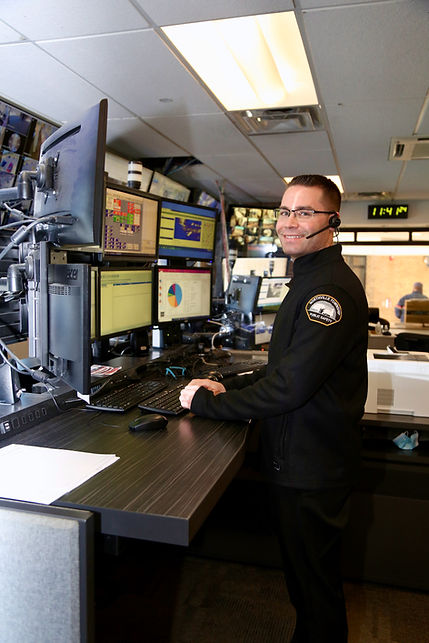
Northville Township Officers Train For Mental Health Crisis
By Laura Fawaz
Northville Township
Police Department


The Northville Township Police Department underwent a training program in January, on how to best handle interactions with the mentally ill.
It’s called the One Mind Campaign, and it’s a progressive approach, “so that people get the help they need, instead of just being sent to jail, or worse,” says Northville Township Police Chief, Paul Tennies.
All sworn officers received mental health aid training. “We may not be the best resource for people, but often times, we’re the only one,” said Chief Tennies.
There are only six police departments in the state of Michigan that have completed the One Mind Campaign pledge. Northville Township is the first to do so in all of Wayne County. This was established by the International Association of Police, as well as other organizations who felt it was necessary, because police officers are the first ones called to any scene. Chief Tennies says their goal is to calmly deescalate the situation, and get that person the help they need, such as a social worker, who also may be called to the scene. If needed, a crisis intervention team may also be called in.
Chief Tennies says that they are also looking to bridge the gap between police departments and community needs. They do not want to resort to just bringing the person to the police station, but rather, to focus on getting that person the help they need. “There are a lot of times where the people have not reached that point where they want to hurt themselves or hurt someone else; so this training helps the officers work with them before it escalades to that point,” Chief Tennies said.
With recent tensions between police and the black and brown communities, the thought of if this decision was motivated by recent political events came up. But according to Chief Tennies, this program has been in the works since 2018. He added that it did not come up because of the Black Lives Matter (BLM) movement, though it has given them more awareness on the need of programs such as this, comprehensive training and mental health awareness.
Though the BLM movement has brought people to be more aware and engaged, Chief Tennies says it has also made the police more alert of the use of force and of those unjustly marginalized. He also added, “We have to communicate better with our communities, and be more transparent.”
Northville Township Officers are trained in various areas. The Crisis Intervention Training (CIT) is one that officers nationwide must be trained on. Within the last few years, officers from Northville Township have gone throughout the country to train other officers, each needing 40 hours of training. This requires the township to backfill the hours for that officer. In 2020, Northville Township was able to to return to the staffing they had in 2008, at 35 police officers, which was prior to the recession and when there were budget cuts in all departments, and in every city and township.
Chief Tennies says that they are looking for community support, to make sure they have the resources to get things done, as well as for those resources to work together to collaborate. For example, Another Step is the Handle With Care initiative, which is a Best Practice program. When police officers are called to homes and encounter children exposed to abuse, they know children will carry that trauma with them to school. It may fester into behavioral and disciplinary issues, causing lasting negatives effects. This initiative will allow the officer to let the school know of the child’s home situation, without violating the family’s privacy.
Chief Tennies wants the community to understand how pivotal of a community evolved effort this is. From Northville Cares and the school’s participation in community events, and the grants they applied for through Hegira Health in Livonia, as well as the wellness checks Hegira Health does on officers and their families, because according to Chief Tennies, more law enforcement officers commit suicide every year, than die in the line of duty. “If the community isn’t engaged in that, you’re not going to have the full impact that you would receive,” added Chief Tennies.
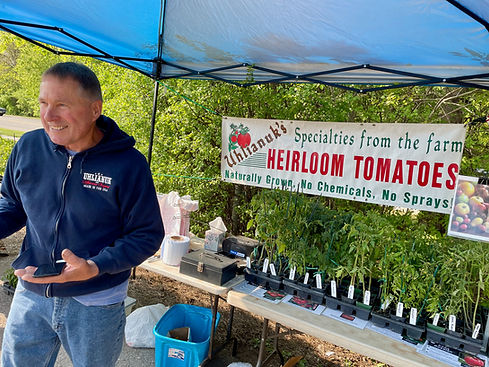
Get To Know Your Local Farmer’s Market
By Laura Fawaz
Ann Arbor, Northville, and Plymouth, Michigan


Farmer’s markets across the county have been making a comeback over the last few years.
Originally, farmers’ markets are said to have come from Egypt, over 5000 years ago. Though the first Farmers’ Markets in North America are dated back to the 1600’s. The reason for their comeback over 400 years later?
There are a few reasons, but most notably, it was estimated that in the 1990’s, food in the United States traveled an average of 1300 miles, and changed hands six times, before making it to the dinner table. This is according to Covent Garden Market, an historical farmer’s market based in Ontario. Covent Garden Market is one of the few markets across North America, that is older than their residing city itself. They also attribute the rise in farmer’s markets’ attendance to a combination of quality products that you could find at your average grocery store, but more fresh as it came straight from the farm, to the market, to you.
Also, the farmer’s market offers a social atmosphere, with knowledgeable businesses on hand for any questions, as long as they are willing to take the time. The vendors can be an educational tools, with tips on how to best plant your flowers or produce, or tips on how to prepare and eat your fresh fruits, vegetables and baked goods.
Some farmer’s markets, such as Flint’s, have their own world of diversity, in less than one square mile. This year-round market has 50 vendors featuring several produce distributors, a great meat market, poultry, cheese, breads and baked goods, in addition to a wine shop, an art gallery, a café, and middle-eastern and Mexican groceries. They are open every Tuesday, Thursday, and Saturday.
Venture to the western edge of Metro Detroit, and you’ll stumble into Ann Arbor’s Kerrytown District, which offers two special, unique markets. Saturday is their farmer’s market, and Sunday is their artisan market. The farmers' market features locally grown produce, flowers, shrubs, plants, jams, honey, maple syrup, baked goods, grains, eggs, dairy products, homemade apparel, toys, jewelry, home decorations, furniture, pottery and candles, all in an open-air atmosphere. From January through April, you can visit on Saturdays 8 a.m. - 3 p.m. From May through December, it is open on Wednesdays and Saturdays from 7 a.m. - 3 p.m. The artisan market is their own mini art fair held weekly, seasonly, every Sunday from noon - 3 p.m.
According to michigan.gov, most vendors at these markets accept credit cards. In addition, when purchasing food items, many farmers markets now also accept SNAP benefits, and other nutrition benefits.
From Marquette, to Grand Rapids, and Holland in between, Michigan offers 300 farmer’s markets statewide, according to Michigan Farmer’s Market Association, where you can also find a list of available markets across the state. These kid-friendly destinations can be a great way to involve the young ones in healthier eating habits, all while getting to know your neighborhood, and supporting small businesses.
Articles
Just The Beginning
Northville’s Living and Learning Center opens MOD Market; soon to close deal on Massey Estate
By Laura Fawaz


Rachelle Vartanian isn’t afraid to knock on big doors. The founder of The Living and Learning Enrichment Center in Northville, which provides services and programs for those on the autism spectrum and other related challenges, has been doing it for years.
Now, all her hard work – along with the dedication of staff, volunteers and supporters – is coming to fruition.
One accomplishment is the MOD Market, which opened in September during Spectrumfest.
Located in downtown Northville at 150 Mary Alexander Court, the market serves as a place where Living and Learning clients can learn job skills, and also sell products they’ve produced, along with additional items.
Vartanian, whose son was diagnosed with Asperger Syndrome at age 3, was concerned about many things, not the least of which is the 90 percent unemployment rate of adults who are living on the spectrum.
“I kept thinking they’re not going be able to live independently if they’re not working, and none of them are working,” Vartanian said.
When the Living and Learning Center began in 2015, Vartanian at first helped her clients by driving them to job interviews, looking through job sites and taking them to Maybury Farm to learn work skills. Now, the Center offers programs which helps clients learn about professional development, social skills, art, music and more.
One popular program is the art classes. Tailored to clients ages 16 and up, it’s a way for those on the spectrum and others who have ADHD or social/anxiety issues to come together and explore the world creatively.
That’s where the idea for the MOD Market came in. Currently, the space has room for 40 artists’ works, half of whom are on the spectrum.
Logan Gorczyca is one of these artists. He joined LLEC last July, and mentioned to Vartanian that he enjoyed art as a hobby. She invited him to become a part of the market, and the rest is history. It’s been a great experience for him so far.
“I feel great, because everyone there is so nice, and accepting of my art,” Gorczyca said. “I feel famous.”
Gorczyca’s work has become so popular that his pieces are often sold before they make it to the market. After the holidays, he plans to start taking custom orders.
One of his next projects is a portrait of the Massey Estate, which will soon be the new home of The Living and Learning Center.
This is another huge accomplishment that has taken a lot of hard work, persistence and dedication. In keeping with her overall goal of teaching those on the spectrum to be independent and successful, Vartanian has had her eye on the estate for years.
She always knew the 14-acre property would be the perfect place to house all the aspects of The Living and Learning Center, including all their current programs and activities, along with housing, farming, various businesses and more.
“This is like the holy grail,” she said.
She goes on to say that because 90 percent of her clients don’t drive, the location of the estate makes it easy for them to walk or ride their bikes to town or work. It’s proximity to local stores and city amenities will also provide a feeling of independence that will go a long way toward helping her clients succeed in life.
It’s been a long road, but there’s still much to do, as Vartanian has big plans for what kind of businesses and farming will be done on the land once the deal happens. Plans include a lavender garden; a butterfly sanctuary; a recycling center; and a bee farm for making homemade honey and wax candles.
One discussion has been to build dorms for students – many of which are going into fields like social work and teaching. Vartanian will move into the existing guesthouse, and live there for the first year while things get rolling.
And we can’t forget the alpaca farm, which will be on the northeast part of the estate. Vartanian’s hope is to use their fiber for blankets, creating meaningful jobs for her people.
She also wants to host weekend camps, as many autistic adults who have autism, Vartanian’s son included, have never before been away from home for that long.
But nothing else can happen until they reach their ultimate goal of raising $3.5 million.
After partnering with businesses such as Masco Corporation and Building Bridges, they are halfway to their goal, but they need help from corporations and the community to raise the rest.
They plan to close on the Massey Estate December 30, 2019.
“This is something that will really change people’s lives,” Vartanian said. “It doesn’t exist anywhere else. And for people like me, for the parents who have young adults that come here, what keeps us up at night is the question, ‘What’s going to happen when I die?’ This solves that, and I really want to encourage people to help us make it happen.”
Vartanian also wants everyone in the community to know how grateful she and her team are for the support they’ve received so far.
“The city of Northville has been amazing,” Vartanian said. “There has not been one business that has said ‘No, we don’t want to work with you.’ Everyone has opened their doors and said, ‘We’ll help you any way we can.’’
If you’re interested in helping The Living and Learning Center reach its goal of bringing independence to those living on the spectrum, please contact them at (248) 308-3592. You can also donate online at www.livingandlearningcenter.org/support-us/donate/donate-online/.